
Power Generation and
Energy Storage
Power assets need more than a decarbonization option. They need a hydrogen solution that protects reliability, supports long-term planning, and fits real operating environments.
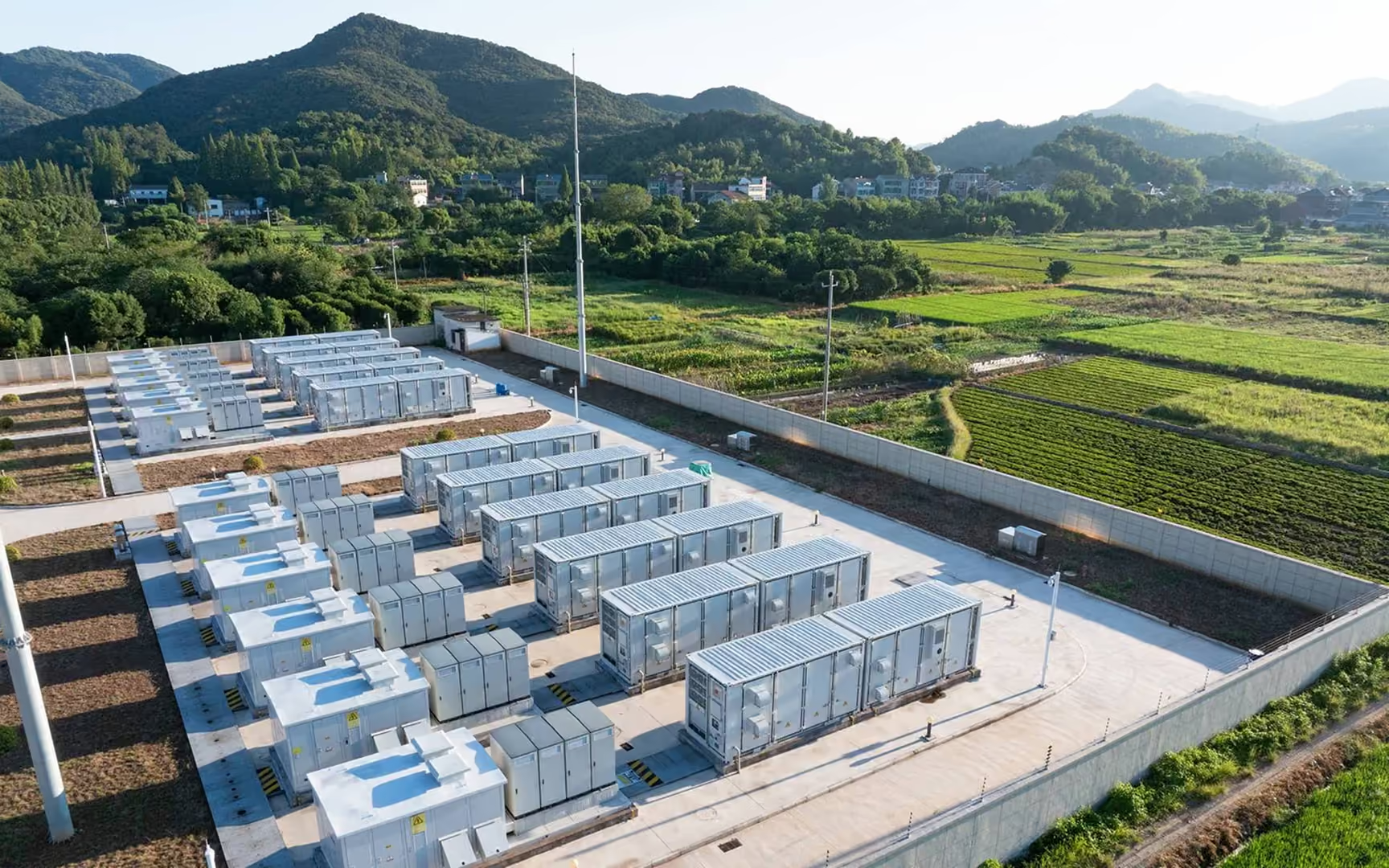
Quest One supports power generation and energy storage projects with scalable PEM electrolysis, system integration expertise, and service models built for long-term availability. This provides more flexibility, more predictability, and a stronger foundation for future energy systems.
What matters most
Reliability, Predictability, Flexibility
In power generation and storage, long-term value depends on availability, predictability, and flexibility. Hydrogen production needs to support secure power supply, work reliably over time, and strengthen the business case of energy assets.

Reliability that protects supply
Power infrastructure depends on stable performance. Hydrogen systems need to support high availability and dependable operation over the long term.

Predictability for long-term asset value
Energy investments are built for decades. The setup needs to create planning certainty, stable operating conditions, and a clear path for future use.

Fuel flexibility for a changing market
As markets and energy systems shift, flexibility matters more. Hydrogen can help create new options for storage, balancing, and fuel supply.
Solutions
What we Deliver for Power Projects
Quest One combines scalable PEM electrolysis with the engineering and lifecycle support needed for power generation and storage applications – from system integration to long-term operation.
Hydrogen systems for storage and flexibility
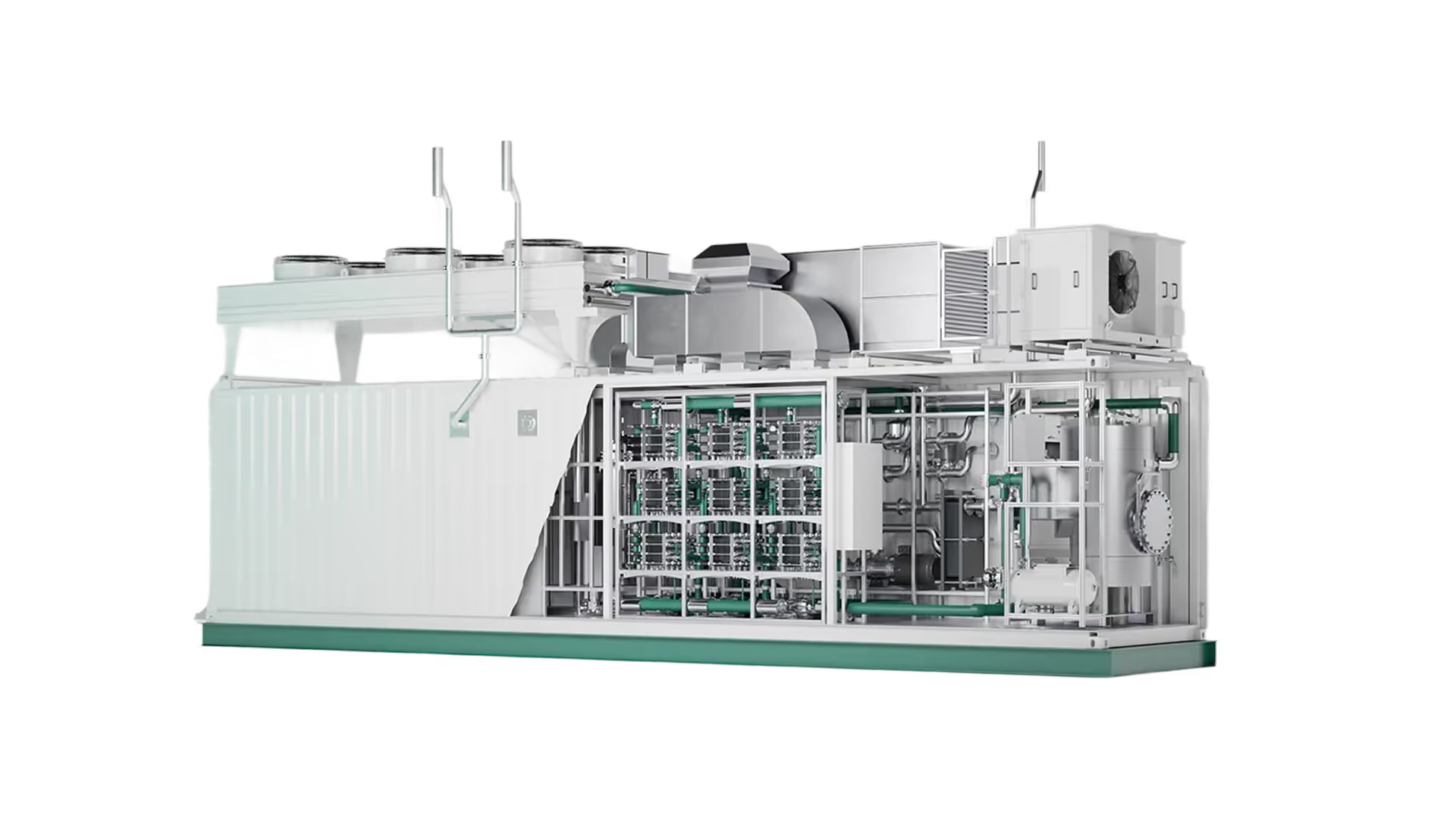
Scalable PEM electrolyzers and MHP systems for energy storage, sector coupling, and flexible power applications.

System integration expertise
System integration engineering that connects hydrogen production with power assets, infrastructure, and operating requirements.

Lifecycle support for long-term operation
Service packages, warranties, and LTSA models that help protect uptime, performance, and planning certainty over time.
Why Quest One
Built for Reliable Power Assets
Quest One brings together scalable hydrogen systems, integration know-how, and long-term service support to help protect availability, flexibility, and asset value.
Reliability that supports critical assets
Quest One systems are built to support dependable operation in applications where availability and continuity matter most.
Integration experience for complex power environments
Hydrogen production needs to work as part of a wider energy system. Quest One helps integrate electrolysis into real infrastructure, interfaces, and operating logic.
Long-term support for long-term value
Warranties, performance guarantees, and lifecycle services help create the predictability needed to protect energy investments over time.
Quest One key figures
Facts That Speak for Themselves
Quest One is already part of projects where renewable power, hydrogen production, and storage work together in real operating environments. From wind-integrated electrolysis to power-to-gas applications, these projects show how hydrogen can strengthen flexibility, storage, and sector coupling.
In the Green H2-Hub Haren project
Quest One electrolysers are connected to the 16 wind turbines of the Fehndorf-Lindloh community wind farm.
At Hydrogen Lab Bremerhaven
A 1 MW Quest One ME450 PEM electrolyzer is used to research the interaction between wind power and electrolytic hydrogen production.
In the Renewable Gasfield project with Energie Steiermark
70 tons of green hydrogen are already used annually in industrial energy processes, while surplus hydrogen is stored for later use.



Frequently Asked Questions
Yes. Hydrogen-based gensets and fuel cells fed by on-site or pipeline-supplied green hydrogen can provide decentralized, low-carbon electricity for data center campuses either as primary power, prime backup, or grid-parallel capacity, replacing diesel and gas.
Stored green hydrogen acts as a long-duration energy buffer that diesel and lithium-ion batteries cannot match. Batteries cover seconds-to-hours of outage; hydrogen reserves can be sized for multi-day resilience, supporting operational continuity during extended grid disturbances, fuel supply disruptions, or extreme weather events.
On-site PEM electrolysis lets data center operators convert surplus renewable power — from co-located solar, wind, or PPA-sourced electricity intostored hydrogen, which can be reconverted to power on demand. This supports 24/7 carbon-free energy targets, hedges against electricity price volatility, Oil & Gas supply shocks, and reduces dependence on grid expansion timelines.
Surplus renewable electricity powers the electrolyzer to produce hydrogen, which is stored and later converted back to electricity via a fuel cell or turbine enabling long-duration, seasonal energy storage.
Hydrogen enables storage over weeks or months at scale, making it ideal for seasonal balancing something lithium-ion batteries cannot economically achieve at grid scale.
Yes. PEM electrolyzers handle dynamic load profiles well and can follow wind and solar generation curves, making them highly compatible with direct renewable coupling.
Electrolyzers can provide demand response services ramping consumption when grid electricity is abundant and cheap, helping balance supply and demand in real time.
The dominant CAPEX items are the electrolyzer stack and compression/storage infrastructure. OPEX is driven primarily by electricity cost, making renewable energy tariff negotiation & system efficiency critical to project economics.