
E−Fuels and H₂−Derivatives
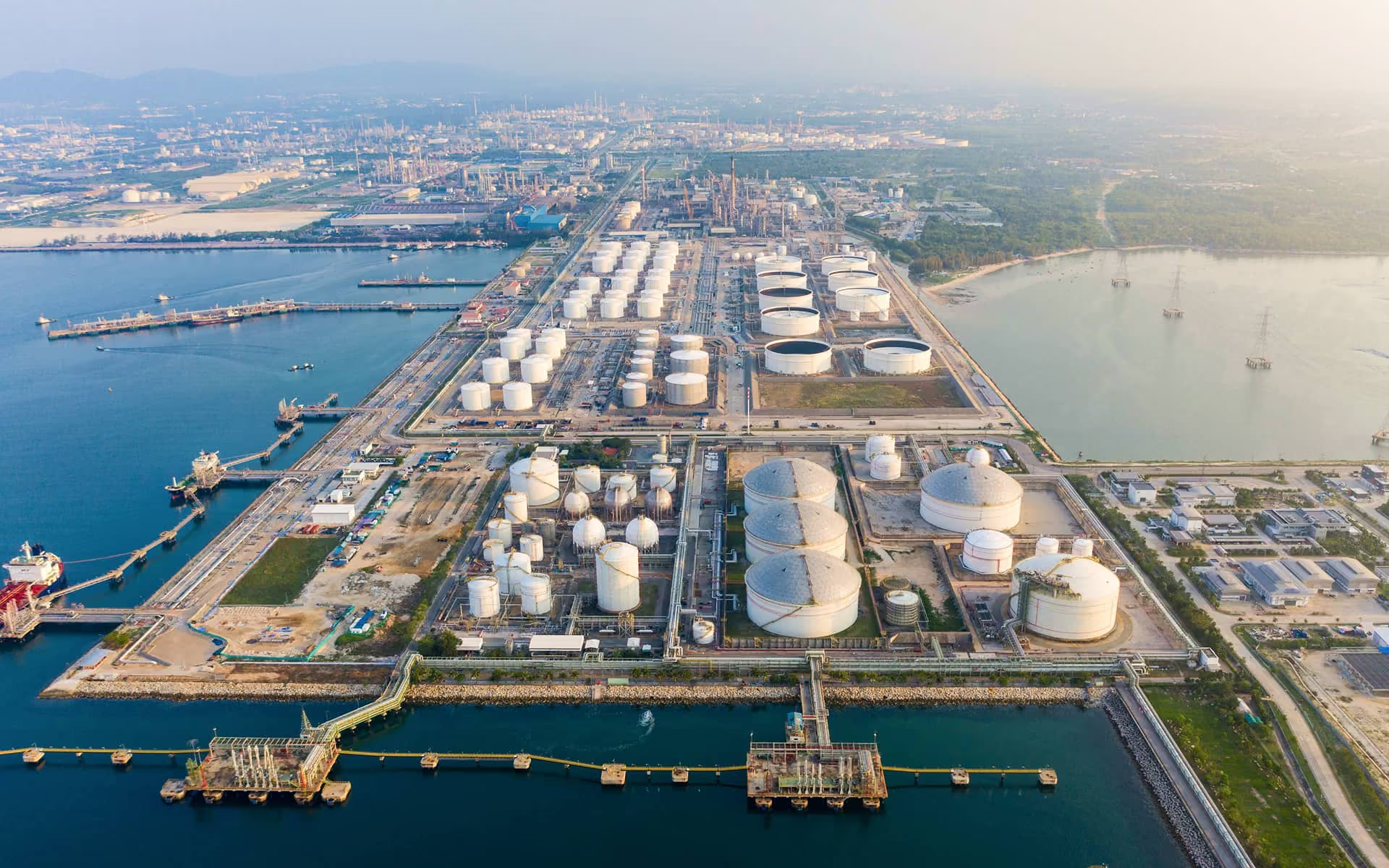
Delivering e-methanol, SAF, ammonia, or e-methane at scale requires hydrogen production that fits site infrastructure, supports certification and traceability requirements, and runs reliably day after day.
Quest One helps tackle the key challenges of e-fuels and H₂-derivatives with scalable PEM technology, integration expertise, and a validated safety concept.
What matters most
Making PtX Execution−Ready
E-fuels only scale when hydrogen production integrates into real sites, supports certification requirements, and stays stable in daily operation. Output alone is not enough. Quest One has extensive experience integrating H₂−production with downstream gas processing technologies.

Compliance you can stand behind
Regulation evolves. Green hydrogen and PtX projects need traceability, documentation, and a credible pathway that stands up to scrutiny.

Infrastructure that doesn’t break the plan
Power, water, storage, logistics, and interfaces to thermochemical processing all need to work together. The hydrogen setup needs to be designed around real site constraints, not one-size-fits-all configurations.

Confidence for CAPEX decisions
Investors want evidence, not projections. Performance data, risk controls, and lifecycle thinking help stabilize the business case.
Solutions
What we Deliver for Industrial Green Hydrogen Projects
To make green hydrogen production predictable, profitable, and operationally resilient, Quest One bridges the gap between technology and execution. By combining scalable PEM electrolysis, engineering, and hands-on support, ambitious concepts become industrial hydrogen projects built for real operation.

Industrial−scale PEM electrolysis
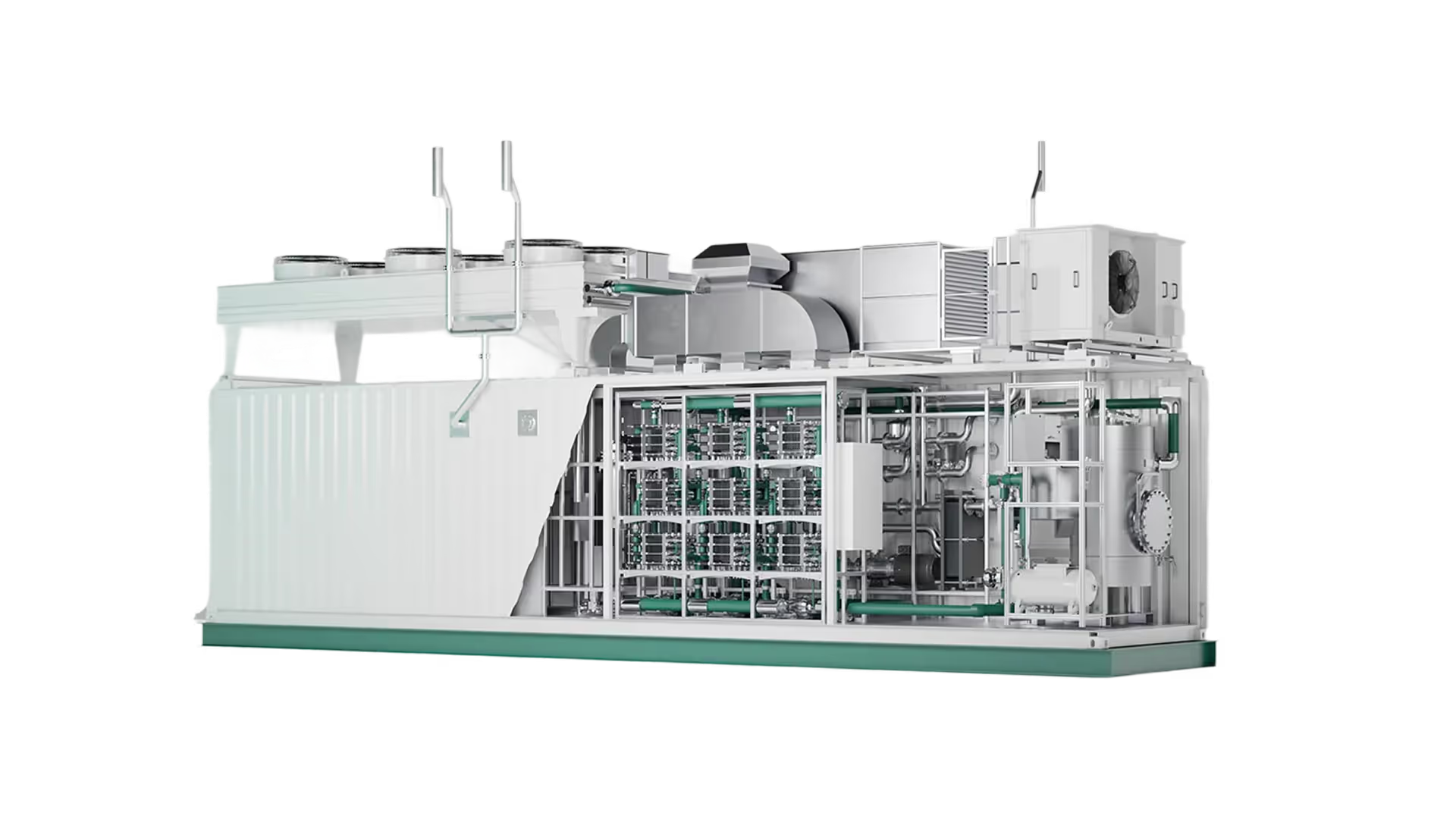
Modular electrolysis systems designed to scale with your demand. Engineered for industrial-grade hydrogen production, providing a reliable foundation for refineries, steel, ammonia, and e−fuels.

Engineering and system integration
We support you with system design, interface management, and infrastructure integration — ensuring that green hydrogen production, balance of plant, and your core processes work in perfect alignment.

Commissioning and lifecycle services
From installation and commissioning to tailored service packages and long-term support: We help you maximize uptime and ensure predictable, high-performance operations throughout the entire asset lifecycle.
Why Quest One
Built for Industrial Reality
Bankability improves when a hydrogen system is designed for industrial operation, the safety concept is validated with process-industry methods, and delivery follows repeatable quality routines. This reduces uncertainty across permitting, financing, and ramp-up.
Validated safety approach
Built on a clean-sheet risk assessment under the Machinery Directive, the safety concept is reinforced by HazOp, LoPA and IEC 61511-compliant safety circuits. Systematic validation and explosion testing turn these findings into documented quality measures for safe plant operation and approval procedures.
Industrial delivery backbone
Automated stack production and structured quality assurance create consistency from unit to unit. This supports predictable delivery, stable performance expectations, and a scalable path for phased roll-outs.

Operational confidence
Deployments and performance data inform realistic operating concepts for PtX projects, including ramping and interfaces. Commissioning and service models help protect uptime once continuous operation begins.
Aviation
Build the Green Hydrogen Base for E−SAF
For aviation, green hydrogen is more than a feedstock. It is the starting point for Power−to−Liquids (PtL) pathways that turn renewable H₂ and captured carbon into synthetic aviation fuels such as e−SAF. Quest One supports that step with scalable PEM electrolysis designed for industrial hydrogen production, high availability and fast load changes.
- Scalable PEM electrolysis for the green hydrogen input PtL projects need for e−SAF production. Quest One’s MHP is built in 10 MW blocks and can be combined to 100 MW and more.
- High dynamic operation for renewable power integration. Quest One states that its PEM systems can move from minimal load to nominal load in 30 seconds and are well suited to coupling with fluctuating wind and solar power.
- Integration support for complex PtL set−ups, from utilities and interfaces to long-term operation, backed by a validated safety approach based on HazOp, LoPA and IEC 61511−compliant safety circuits.

Key facts
Figures That Matter
For e−SAF and other H₂−derivatives, hydrogen cost matters. Quest One’s PEM technology helps reduce it with 77% system efficiency at 30 bar, high−pressure operation that cuts compression effort, and a modular platform designed to scale from 10 MW blocks to 100 MW and more.
Hydrogen output per 10 MW block
One MHP 10 MW block produces 4,600 kg of H₂ per day at nominal output — a clear basis for sizing PtL projects and hydrogen supply for e−fuels production.
System efficiency at 30 bar
With 77% system efficiency and 51 kWh/kg H₂ at 30 bar(g), the MHP is designed to reduce electricity demand per kilogram of hydrogen — a key lever in e−fuels production cost.
Fast Renewable Integration
The MHP ramps from minimal load to nominal load in 30 seconds, helping align hydrogen production with fluctuating wind and solar power.



Frequently Asked Questions
Sectors like aviation, shipping, and heavy chemicals cannot easily electrify. E-fuels provide a drop-in or near-drop-in replacement for fossil fuels, leveraging existing storage, distribution, and end-use infrastructure while delivering deep decarbonization.
Yes. Our systems are designed to integrate with downstream synthesisprocesses, providing the steady or load-following hydrogen supply required by methanol, Fischer-Tropsch, and other PtX synthesis platforms.
Under RED III, e-fuels must meet RFNBO additionality, temporal, and geographic correlation rules to be counted toward renewable energy targets. Quest One supports customers in designing project configurations and documentation that meet these requirements.
Synthesis processes generally prefer stable hydrogen input while some advanced systems are also dynamic. Quest One systems can be operated inload-following mode with intermediate hydrogen buffering, balancing renewable input variability with downstream process stability.
The EU Innovation Fund, Hydrogen Bank auctions, and national PtX support programs provide significant co-funding for e-fuel projects. Quest One can support applications with technical specifications, system performance data, and integration documentation.