
Industrial
Decarbonization
Improving your emissions footprint with green hydrogen takes a setup that fits existing infrastructure, makes economic sense, and runs reliably day after day. Quest One enables this with scalable PEM technology, industrial system expertise, and a safety concept that sets a new benchmark for large-scale hydrogen projects.

Industrial sectors
Where Green Hydrogen Delivers the Biggest Impact
Decarbonization is not one-size-fits-all. Whether the focus is on optimizing existing hydrogen processes or replacing fossil feedstocks to build new value chains, a sector-specific approach helps identify where green hydrogen can create immediate, concrete impact.


Refineries
Safe Green Hydrogen for Refinery Operations
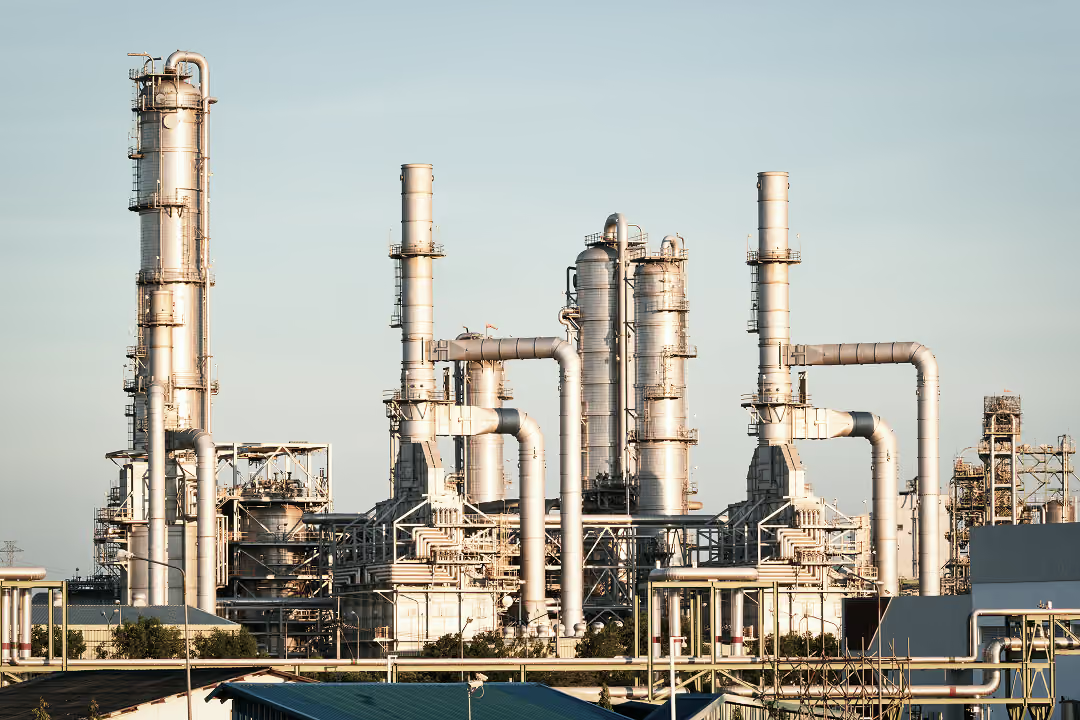
Refineries are under pressure to decarbonize without compromising safety, uptime, or process stability. Quest One supports that with green hydrogen systems built for safe, reliable operation and compliance with oil and gas industry standards.
- Designed for safe, reliable operation in refinery environments and aligned with oil and gas industry standards
- Built to integrate green hydrogen production into complex refinery and energy systems without disrupting operations
- Modular and scalable to support phased deployment, future expansion, and large industrial hydrogen projects
Steel
Competitive Low-Carbon Steel Production With Reliable Green Hydrogen
Steel producers must cut CO₂ emissions while staying competitive under intense international price pressure. As the industry shifts from coal-based blast furnaces to low-carbon routes such as DRI, green hydrogen becomes a key enabler. Quest One delivers industrial PEM electrolyzer systems for reliable, large-scale hydrogen supply and integration into complex steel production environments.
- Reliable green hydrogen supply for DRI-based steel production at industrial scale
- Seamless integration into complex steel plant and energy infrastructure
- Modular, scalable deployment to support the transition from first projects to full production



Ammonia
Decarbonize Ammonia Production
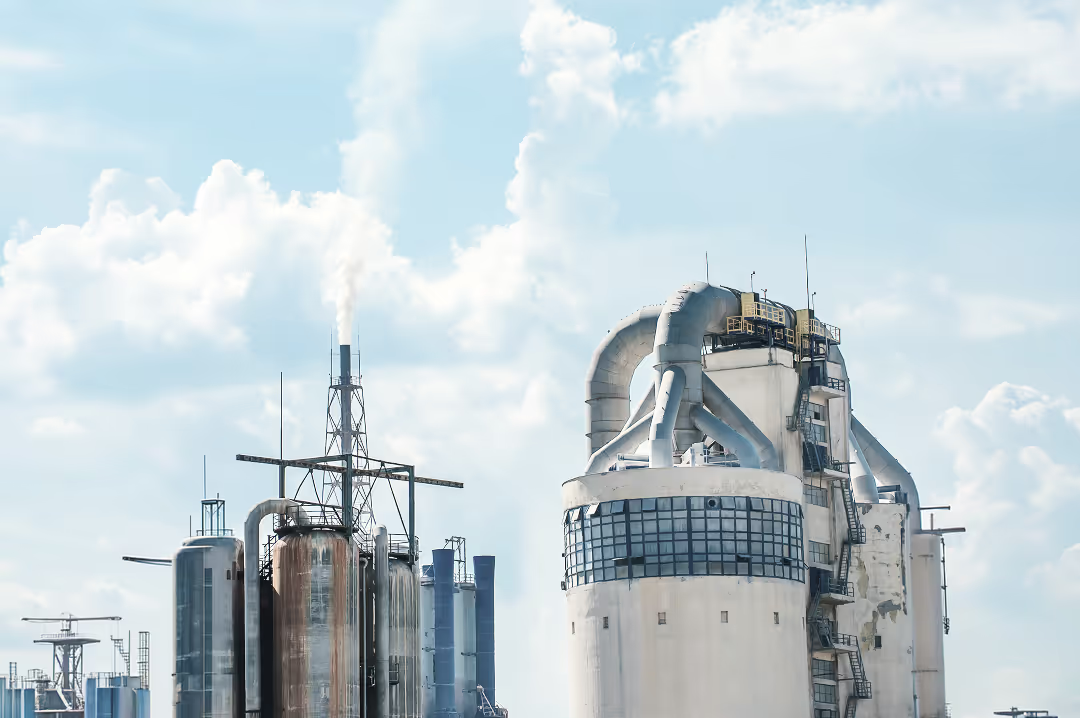
Ammonia is a core hydrogen application in fertilizer production, chemical manufacturing and mining. Low-carbon ammonia production needs reliable green hydrogen at industrial scale. Quest One provides PEM electrolysis and lifecycle support tailored to site conditions and project requirements.
- Scalable PEM electrolysis for the green hydrogen input ammonia production needs – modular and built for industrial operation
- Support for commercially viable project rollouts with commercial and lifecycle services that address cost, risk and integration early
- Long-term operation backed by a validated safety concept and service packages up to LTSA
What matters most
Making Industrial Decarbonization Actionable
In sectors where decarbonization is hardest, results are what matter. Green hydrogen production for industrial decarbonization needs to fit into existing sites, support economic viability, and stay ahead of regulatory change. Quest One helps turn that ambition into operational reality built on a safety concept that sets a new industry benchmark.

Predictability over project risk
Clear answers are essential before making an investment – from sizing to long-term operations. Transparency on feasibility, cost, and risk helps prepare projects for investment. Doc and validation depth also support approvals and funding.

Seamless integration into existing operations
Hydrogen does not happen on a blank sheet. H₂ production must fit cleanly into existing infrastructure, interfaces, and workflows with no surprises in operation. Our safety concept is designed for process-industry environments.

Reliable performance in daily operation
At the end of the day, availability is what counts. We support you across the full lifecycle through commissioning, service packages, and a setup designed for long-term operation. Safety is built into the design, not added later.
Solutions
What we Deliver for Industrial Green Hydrogen Projects
To make green hydrogen production predictable, profitable, and operationally resilient, Quest One bridges the gap between technology and execution. By combining scalable PEM electrolysis, engineering, and hands-on support, ambitious concepts become industrial hydrogen projects built for real operation.

Industrial-scale PEM electrolysis
Modular electrolysis systems designed to scale with your demand. Engineered for industrial-grade hydrogen production, providing a reliable foundation for refineries, steel, ammonia, and e-fuels.
Engineering and system integration
We support you with system design, interface management, and infrastructure integration – ensuring that green hydrogen production, balance of plant, and your core processes work in perfect alignment.

Commissioning and lifecycle services
From installation and commissioning to tailored service packages and long-term support: We help you maximize uptime and ensure predictable, high-performance operations throughout the entire asset lifecycle.
Why Quest One
Leading Technology, Proven and Scalable
Industrial decarbonization succeeds when technology, integration, and operations are fully aligned. Quest One provides scalable PEM electrolysis solutions backed by engineering experience, a strong focus on availability, and a safety concept designed for industrial-scale hydrogen projects.
PEM electrolysis at any scale
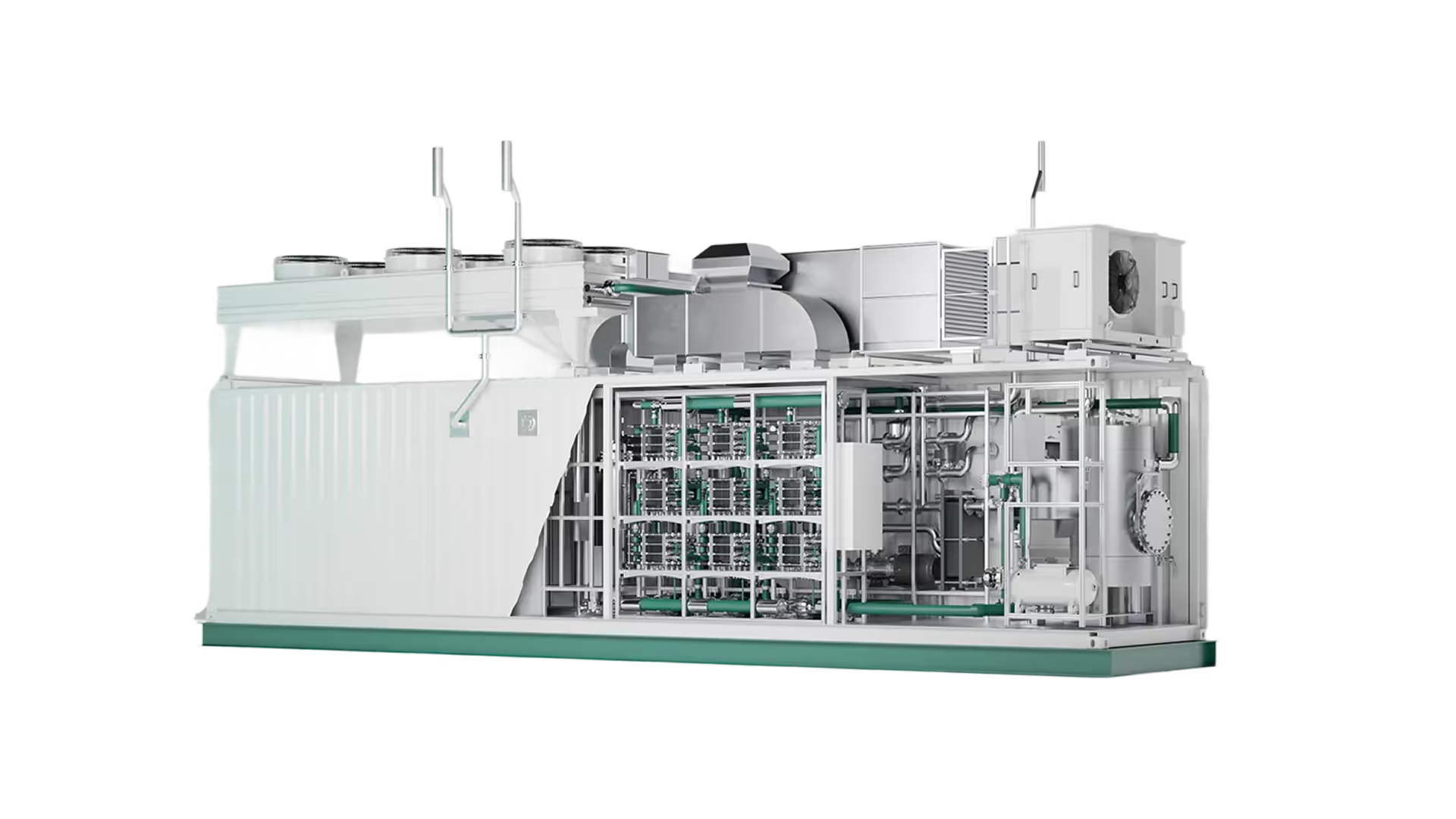
With products like the Modular Hydrogen Platform (MHP) and ME450, we deliver green hydrogen solutions ranging from standardized plug-and-play containers to large scale customized plants, modular by design.

Gigahub Hamburg
At our state-of-the-art Gigahub, we we are producing serial stacks at high capacity while adhering to highest quality standards. Our in-house test facility enables continuous improvements and innovation with up to 50 test stands.
State-of-the-art safety by design
We apply process-industry safety methods and validate safety measures thoroughly, so industrial projects can scale based on experience, not assumptions.
Quest One in numbers
Facts That Matter
For industrial decarbonization, two things matter most: scalable capacity and dependable quality. Our key figures show how Quest One delivers both.
Green hydrogen per 10 MW block
Approximate annual hydrogen output at nominal operation.
Green H₂ per 50 MW plant package
Approximate annual hydrogen output for a 50 MW setup.
In-house stack testing at the Gigahub
Quality is validated at scale: Quest One’s Gigahub can operate up to 50 test stands for stack testing and development.


Frequently Asked Questions
General questions
Green hydrogen produced by PEM electrolyzers replaces fossil-fuel-derived hydrogen (grey/blue) in processes like ammonia synthesis, steel production, and chemical manufacturing cutting emissions at the source.
Industrial applications typically require 10s to 100s of MW-scalesystems. Quest One's modular architecture allows capacity to be sized and expanded to match your specific process hydrogen demand.
Yes. PEM systems can connect to existing gas distribution networks, compression systems, and process pipelines with manageable engineering integration effort.
Quest One PEM electrolyzers produce hydrogen at >99.9% purity, meeting the quality standards required for most industrial processes without additional purification steps.
ROI depends on your current hydrogen procurement cost, electricity tariff, carbon pricing exposure, and available subsidies. Quest One offers feasibility assessments to model your specific case.
Yes, programs like the EU Innovation Fund, Horizon Europe, and national IPCEI schemes offer significant co-funding for industrial decarbonization projects involving green hydrogen. Quest One can support by providing technical input and support letters to funding applications.
Refinery
Yes. Quest One PEM systems deliver hydrogen at high purity, which meets or exceeds the quality requirements for hydrotreating and hydrocracking without additional purification infrastructure.
Green hydrogen cost competitiveness depends heavily on electricity tariffs, carbon pricing, and REDIII penalties. With rising EU ETS carbon prices, green H2 is likely the more commercially sound for many refineries which are already locking in long-term green hydrogen supplies now.
The EU Renewable Fuels of Non-Biological Origin (RFNBO) regulations under RED III set mandatory targets for renewable hydrogen use in industry. Refineries supplying fuel markets will face compliance obligations, making green hydrogen procurement or on-site production a regulatory necessity not just a sustainability choice.
Yes. PEM electrolyzer outputs can be fed directly into existing hydrogen distribution headers at the appropriate pressure, with integration engineering managed in coordination with refinery operations teams.
Quest One systems are designed to comply with ATEX and relevant industrial safety directives. Deployment within a refinery HAZOP framework is standard practice, and our engineering team supports the full safety documentation and zone classification process.
Yes. Quest One is experienced in working within EPC-led project structures common in the refinery sector, including providing the technical documentation, FAT/SAT protocols, and commissioning support required by major operators.
Steel
Steel manufacturing is one of the largest industrial sources of CO₂ globally. Replacing coal or gas in the reduction process with green hydrogen via direct reduced iron (DRI) routes eliminates the bulk of process emissions, enabling near-zero-carbon primary steel.
In hydrogen-based DRI, green hydrogen reduces iron ore pellets to metallic iron at high temperature, releasing only water as a by product.
Commercial green steel plants require hydrogen at hundreds of MW to GW-scale electrolyzer capacity. Quest One's modular MHP architecture and large-scale electrolyzer configurations support phased build-out aligned with steel plant ramp-up.
The Carbon Border Adjustment Mechanism (CBAM) prices embedded carbon in imported steel, while the EU ETS continues to raise the cost of fossil-based domestic production. Together these shift the economics meaningfully in favor of green steel investments.
Large-scale green steel typically requires dedicated PPAs with wind and solar developers, often combined with hydrogen storage to manage variability. Co-location with renewable assets is also being explored for integrated projects.
The EU Innovation Fund, European Hydrogen Bank, and national industrial decarbonization programs provide major co-funding for green steel. Quest One supports applications with electrolyzer specifications and integration documentation and supply support documents.
Yes. Phased decarbonization for example, blending green hydrogen into existing reduction processes before full DRI conversion is a viable pathway, and Quest One systems can be sized and deployed to support transitional configurations.
Ammonia
Ammonia is one of the largest hydrogen-consuming industries globally and a key input to fertilizers. It is also emerging as a hydrogen carrier and marine fuel. Replacing grey hydrogen feedstock with green hydrogen directly decarbonizes ammonia production at the source.
Green hydrogen produced by electrolysis is combined with nitrogen (from air separation) in the Haber-Bosch process to produce ammonia. Substituting green hydrogen for SMR-derived hydrogen eliminates the bulk of the process's CO₂ emissions.
Haber-Bosch catalysts require very high hydrogen purity with minimal oxygen and water content. Quest One PEM electrolyzers deliver >99.9% purity directly, meeting the specifications of modern ammonia synthesis loops.
Green ammonia projects typically require hydrogen capacity from tens of MW for smaller plants up to several hundred MW for world-scale facilities. Quest One's modular architecture supports both ranges through parallel MHP deployment
Yes. Our systems can supply hydrogen to retrofitted ammonia plants replacing SMR feedstock, or be designed into new green ammonia facilities from the ground up including dynamic operation modes suited to renewable-powered synthesis.
Ammonia synthesis traditionally runs at steady state, but modern flexible Haber-Bosch designs can accommodate variable hydrogen input. Quest One systems can be configured for steady or load-following operation depending onplant design and storage strategy.
Ammonia has higher volumetric energy density than liquid hydrogen, an established global trade infrastructure, and can be used directly as a marine fuel or cracked back to hydrogen at the destination making it a leading candidate for long-distance hydrogen transport.
The EU Innovation Fund, Hydrogen Bank auctions, and national support schemes co-fund green ammonia projects. Quest One supports funding applications with technical documentation and system performance data as well as supply support letters.